Propensity Marketing and Database Aggregators

Propensity marketing is used to reach a target market audience based on their observed propensity for engagement in a particular subject matter. When you market to consumers based on their previous patterns, you have a much greater chance of reaching the right people, and thus, increasing your return on investment (ROI). The most successful marketing campaigns are based on propensity marketing, but marketers too often seek a shotgun approach rather than a sniper approach. This is also known as database marketing, and it is the basis of companies known as database aggregators who offer database reduction services to reach consumers more effectively.

Propensity Marketing Example

A very simple example of propensity marketing is the delivery of Google’s AdSense. AdSense advertisements are either display advertisements or a series of text links that you find on Websites along with a statement “Ads by Google”. When you see an AdSense advertisement delivered by Google, it is not by accident that it is related to what you are already looking at. For example, if you perform a Google search for “racing Webcast”, you will find one of my Websites, CopMagnet.com (actually, you will see this blog first). On CopMagnet.com, I have included Google AdSense ads, which you will see on the right side of the page. Based on the content of the site, AdSense delivers related links based on the propensity of the site’s visitors to be interested in both racing and Webcasts. In my current visit to the site, the ads I was served are titled, in this order:

  • Webcast
  • Webcast Hosting Services
  • Twin Cities Drag Racing
  • Firestone – Official Site
  • Tires On Sale Now 60% Off
Based on the content of the site, Google uses propensity marketing tactics to determine that the same user viewing my racing Webcast may also be interested in other Webcasting sites and other racing sites. Not only that, Google also determined that the user may be interested in tires. After all, if it is another racer watching me, he or she also probably buys a lot of tires.

Propensity marketing does not just mean that the ads are related, but that based on statistical data, the user would likely have a propensity to find the ads useful. In this example of Google AdSense, you find a very basic form of propensity marketing, but it really goes much deeper than that. This is why Google also logs much broader data based on many other searches that you and a broad public have made, and uses that database for a more efficient targeted approach.

Implementing Propensity Marketing

In order to implement propensity marketing, you must first have broad data that includes your target audience. Another name for propensity marketing is “database marketing”. Using a database of consumer patterns, propensity marketing uses known facts about a broad group of consumers and reduces the database to include a very specific audience.

In order to narrow the database, you may use factors such as age, gender, income, industry, etcetera. However, proper propensity targeting may go further, by selecting far more specific factors such as what kind of car they drive, whether they smoke, how many children they have, and many more factors.

Database Reduction and Unexpected Propensity

A carefully considered propensity marketing campaign will not only rely on database reduction (excluding irrelevant data), but it will also look at lateral factors of your chosen subgroup. Performed correctly, it will include seeking unexpected patterns that may not appear related on the surface. For example, it may not initially make sense to a marketer to question the propensity of a smoker to also buy running shoes. This is an unlikely example, but it goes to the point of looking at patterns in the data that are unexpected but may yield the desired results.

Database Marketing: Gathering Data vs. Purchasing Data

Database marketing starts with the data, but where do you get the database? There are two viable options for data acquisition and data reduction. You can gather the data and attempt data reduction using your own means, or you can purchase a database from a data aggregator service.

If you choose the long road, and decide to gather and reduce a database using your own means, you must consider every resource. You can aggregate the data in many ways, including your existing customer database, your Website server logs, creating and implementing polls, requesting customer feedback, and others. However, it is generally far more efficient and effective to purchase the data from a data aggregator. A data aggregator will have information that is far beyond your immediate reach. Data acquisition is their business, and they will have information at their fingertips that is often far out of your reach. A data aggregator will not only have the information about your existing market, but will also have information about the market that you have been missing.

Purchase a Database: Selecting a Database Aggregator

So now the “squillion dollar question” is how to select where to purchase your database and which database aggregator and database reduction service will have what you need. Obviously, Google is a great place to start your search for a database aggregator or database reduction provider. There is more information added to Google every day about propensity marketing and databases for sale. Finding the right aggregator should be very carefully considered. I am presently studing the database marketing industry for my own benefit, and I will update this article with my findings when my search for the right data aggregator and reduction service is complete.
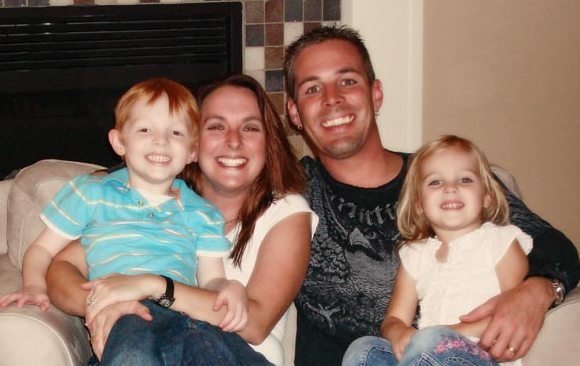
Three Kids Prove Social Networking Works

Social networking has been analyzed, scrutinized, bastardized, and commercialized, but my family is proof that it works, and that it has worked for over a decade. If you will give me a moment, I will tell you why I am blogging about this today, and give inspirational credit to people I met and have built deep relationships with that have lasted for over a decade and growing, and those whom I only recently met. I will start with today, and I will go back to the really good stuff when I met Peggy.

My Social Networking Proof 

A little while ago, I sent a tweet on Twitter (for the confused, see: “Twitter Usage Study: Pass The Tweet #PTT“) and it read as follows:

“Social Networking Fact: I met my wife online in 2000 and we await the birth of our 3rd child in April. It works, I tell ya!”.

I sent this tweet after an engaging blog conversation asking “When will social media be ‘ready’?”. I am never the guy to leave a quick one-liner on a blog because I am just not a link-spammy blogger. I would rather say nothing at all than to say “Great article, it was really helpful.” As it should be, my comment was thoughtful, and it was engaged by the author, Caleb Gardner. Here is how it went:

Mark Aaron Murnahan:

When somebody questions the ROI of social media, they have already missed the point. It is worse than the mentality of trying to measure the ROI on taking a client to a ball game or going to dinner. Building relationships should not be measured by dollars and cents. I have just been communicating with a friend whom I met and have built a strong friendship since 1998. I have never asked her for business or for referrals, but you can bet that if she knows somebody who needs my services, I will get the call. Further, I did a lot of dating online years before it was common and finally met my wife online in 2000. We are now expecting our third child in April 2009. Social networking has been ready for years, but people being ready for it is another story. Social networking used to happen in ballrooms and the corner restaurant. The primary thing that changed was the venue.

calebgardner:

@Mark

I love the personal story about your wife. Way to make an emotional (literally) appeal for social networking.

It’s an interesting thought that social networking has been around for years. You’re right – it literally has in that we’ve always built relationships with those around us. I think what is happening is that the Web is making us more cognizant of the relationships we build, because we’re able to build them with people that we never would have been in contact with before.

Hmm… have to give that some more thought. Sounds like an interesting post on its own… 

Mark Aaron Murnahan:

@caleb

Since my comment, I was on the phone with a good friend I know from my “other job” racing cars. His very financially successful company has a churn issue because of a hugely competitive market with tiny margins. I used myself as an example with him. I explained that he would not hear my message as clearly if he did not know me, my wife, my children, and my integrity. He has been in my garage working on racecars with me at 3:00am before a big event, and we drive around corners at 100+++MPH together, for the sake of Pete. He knows that I have a lot more at stake than a sales pitch. We have a relationship. I have tried to reach his executive staff to understand that without relationships, all we have is a sales pitch, and that people do not buy the pricetag but rather what is attached. He gets the message, and he is really excited to work together, as am I, but he is getting a lot of pushback on implementation from his fellow execs. They have a corporate stuffiness that does not even match their written message and their goals. The bottom line is that if we miss the relationships, we work much harder and achieve less. You built on our relationship by engaging me with your reply. This is how stuff really works. My next blog article about it is forthcoming.

How I Met My Wife: Re-tweeted

Remember that tweet I sent? It was re-tweeted and replied to, which is always an honor, because it means I said something that people actually heard and thought enough about to tell others, and to ask a question. A question was posed by @askorkin as follows:

“really! you met your wife online, i am intrigued how? if you don’t mind my asking :)”

I replied:“Since you asked how I met my wife online, I am inspired to blog about it. It is my best proof that social networking really works.”

My Social Networking in 1998

In 1998, I had a friend and business partner who did not really understand the reach of the Internet. He was a physician and I was a marketing guy. We were working on a project targeted toward pharmaceutical companies that were spending tons of money to bring doctors to luxury resorts in Miami, Palm Springs, Orlando, Phoenix, and elsewhere, to learn about their new drug. At the time, thanks to government subsidized travel and tourism in Central Europe, we found that it was actually less costly to bring American participants to a conference in Budapest, Hungary than to Miami. This became the target of our new conferencing company.

Jeff posed a lot of questions as to how the Internet worked into our business model. He did not really “get it”. I explained that I had developed a network of friends in the region, and globally. Even back then, my European social network of friends included Bianca, who was an au pair from Austria working in USA, with whom I have communicated even in the last 24 hours (see my Facebook).

We made connections with hotel managers, tourist attractions, and one of our favorites, Varsaci Karoly (“Karchi”). Karchi worked for the E.C. as a Euro Qualifier, and we were fast friends. We got to know him online, but he soon showed us many incredible times in Budapest. We had a lot of fun at the courtesy of the Hungarian government. After all, it was ideal for them to attract American dollars back then.

It was really sinking in for Jeff, by this point, that this Internet thing could be useful. However, he still questioned it as a marketing tool. It is funny how most people think of it as a marketing tool first, and a networking tool second. We (he) flipped that around. Jeff knew that I was pretty “Internet savvy”, but I needed to give him a clear example. This gets to how I met my wife.

Social Networking Study: “Mark the Single Guy”

By 1999, I was single, 26 years old, and retired. My marketing business had been pretty good to me, but my personal life was lackluster from years of focusing on my work. Jeff’s challenge to use the Internet to show localized results led me to kill two birds with one stone. I wanted a woman to hold, and he wanted to understand the Internet. Again, it is funny how he thought localization was the challenge back then, but now globalization is the challenge.

I set out to prove that there were enough people right there in our town of Topeka, Kansas, USA to show the Internet market reach. Of course, back then, his concern was that the audience may be too slim. Wow, I showed him. I used a XOOM.com account (back then xoom.com was a free host) to create a significantly detailed biography of “Mark the Single Guy”, and I used a “.cjb.net” account to shorten the URL. I included everything I liked, didn’t like, and I even had a special section about my baggage. The “Mark’s Baggage” section was complete with an affiliate link to ebags.com. I promoted my heart everywhere I could, and I used the equivalent of today’s “re-tweeting” by asking my online social network to pass along the bio and help me find the woman who would become the love of my life.

It was not too long before I was receiving 300-400 email messages per day from ladies within a 50 mile radius who wanted to meet me. I met a lot of ladies, and I had a lot of fun … yes, a lot! I met a few neurotic ladies like Sara, Nancy, and DeeAnne, and I broke a few hearts. I am still sorry for making one of the Stacys cry. She was a sweet girl, and I really liked her family. Of course, Sara, Nancy, and DeeAnne were the ones I really wanted, but thanks to them, I was single when I met my darling wife, Peggy.

After the neurotic gals had nearly broken my will, I was pretty careful when it came to being close to Peggy. I think I was in love with her before I ever touched her hand or smelled her hair. Peggy was clearly very special, and I would do my best to keep from hurting her with my baggage (and WOW, I had baggage). Peggy does not like to admit this, but she admitted back then to crying as she read the deepest parts of me, the man she really wanted but was afraid of.

Social Networking: Shedding My Skin for Peggy

Sharing the real me was like pulling a scab off my entire body and letting air hit my sensitive inside. In my biography, I had shed my skin and stood emotionally naked for the world to see and inspect. It is lucky for both of us that I was real. I showed my sweat, my tears, my fears, my body odor, and the things that made me a real person.

Is This Fact or Fiction?

Some will question if this is all real, just as Peggy did back then. The accounts you have read here are only a small part of the full story, but it is all real, and it is all me. Perhaps as you get to know me, I will tell you the really deep and hard stuff that I once shared more freely online.

It cannot be all wrong to share who you are. After all, that is how I met the love of my life and the mother of my six year old son, my three year old daughter, and the baby she carries today whom I will announce in April 2009.

If you would like to know me better, just tell me so, and we will make that happen. I know the value of social networking, and I treasure the many relationships I have built.


Related Articles:


Twitter Usage Study: Pass The Tweet #PTT

Twitter has become an invaluable tool for bloggers, news agencies, Internet marketers, and friends who want a greater connection with the world. This Twitter study is intended to see just how far Twitter can reach, and to find how useful Twitter can be for spreading a message quickly and broadly. Before you go any further, please Pass The Tweet #PTT now!

Pass The Tweet!
(be sure to enter “#ptt” in your tweet)

The Twitter Study

The intent of this Twitter study is to determine the potential reach of Twitter micro-blogging and to find just how fast a Twitter message known as a “Tweet” can reach around the world. Let’s just pretend that this is a huge news story that we want everybody to hear. I believe that many Twitter users will be shocked to see just how quickly a message can spread. Please note that I am not a “Power Tweeter”, and I have begun this study with a relatively new Twitter account with only 78 followers, and a blog that was launched in December 2008. It is intended to find the usability and reach of Twitter for an average user, and not just the Power-Blogger or the greatly influencial … just us average people. My “Pass The Tweet” project could be “The Tweet Heard Around the World” or it can just be a couple of Tweets among friends. Tweeters will decide. 

I will post progress here on this blog, and I also welcome you to give your comments and include your location.

I have chosen a Twitter hashtag of #ptt to track the progress of this study. In order to see the reach of the Twitter hashtag, you may check it at Twitter.com or Hashtags.org. I have also decided to embed a map from Amung.us to give a visual aid to the #ptt Twitter study.


What is Twitter?

Since I am sure there is somebody out there hiding under a rock asking “What is Twitter”, I will briefly explain. Twitter is a service that allows you to follow short 140 character news feeds of people you find interesting, and for people who find you interesting to follow your feeds. It is called micro-blogging, and it has caught on in a huge way. Twitter is being used by many television news agencies, bloggers, newspapers, and friends just wanting to have a greater connection with the world. Twitter may be used from a Web interface on their Website, Twitter.com, from your cell phone, from desktop software, or from many Twitter tools found easily on the Internet.

Twitter is Simple

Twitter owes a lot of its success to its simple call to action. Twitter, although a method of social networking, is perhaps the most simple to implement of all social networks. Signing up for a Twitter account should take most users under a minute. In addition to a very easy to master Website interface, there have been many tools developed by others to make Twitter even more simple for users to keep their Twitter status current. Whether from their desk or from their phone while stuck in traffic, Twitter users love the simple means to keep everybody up to date, quickly. Twitter is quicker than blogging, and because of a 140 character limit, users are less likely to encounter writer’s block than traditional blogging. Thus, we call it micro-blogging.

Twitter News Media

I found it very interesting when my local CBS affiliate in Topeka, Kansas did a story on the amazing reach of Twitter. They ran a story on a recent Tweet-up, where Twitter users around Topeka came together to meet in person and network with other Twitter users. It was a great success, and many were in attendance. It was such a success that it was only a day or two later when the Topeka ABC affiliate began promoting the use of Twitter to follow news and weather stories, which the CBS affiliate had been doing for some time. I believe that it was perhaps only when they saw a local Twitter reach that the power of the micro-blog really made sense to them.

Google Streaming Medical Data via Wi-Fi

Today, Google and IBM will release a new plan for streaming medical data directly from your body to Google Health. The Google Health service allows for the storage and retrieval of important medical history on the Internet. The new plan between Google and IBM is aimed at providing real-time streaming of the medical data directly from Google enabled Wi-Fi radios in medical devices such as glucose meters, heart monitors, and others.

According to an article by Forbes.com titled “Letting Google Take Your Pulse”, Andy Greenberg wrote: “Hooking up those devices to the Web, IBM argues, will offer a new immediacy and granularity of health monitoring. A user can remotely track the blood pressure readings or glucose levels of a diabetic parent living alone, or stream his or her medical information like weight or heart rate directly to a doctor or physical trainer.”

Streaming Medical Data: The Advantages

Advantages to real-time streaming of medical data are obviously the immediacy in an emergency, and a potential to be proactive with treatment. When the data is acquired and analized sooner, there is clearly a much greater chance of mitigating health concerns. The advantages to patients could mean the difference between life and death. From a business perspective, there is a great potential for savings on the part of patients, insurance companies, and medicare.

Similar technology has been developed and used in Denmark and Canada, and it is now targeted to be used in the United States.

Streaming Medical Data to Google Health: Security Implications

The security implications of streaming medical data via Wi-Fi to Google are an obvious concern for many people. In the article by Forbes.com, it was compared to GM’s OnStar service, but for a patient. Like the commercials you see on television where the operator dispatches an ambulance after receiving an airbag alert, the technology would be sending health data alerts before a problem is too late to control. Personally, I own three GM vehicles with OnStar, and I am not fond of the fact that unnecessary people have access to where I go and what I do. I would feel far more invaded if my medical records were treated the same way.

There will always be a large segment of people reluctant to adopt new technologies, and when medicine is involved, there should be a reasonable level of caution. This is why acts of congress such as HIPAA (Health Insurance Portability and Accountability Act) have taken place. I have to imagine that a similar level of scrutiny and details to security are taken into account with the new technology of Wi-Fi streaming of health data. In any case, the the public’s security concerns will likely be a much greater obstacle to the Google Health and IBM efforts than the technology of medical data acquisition.

What do you think?

Building Referral Business: Referrals Build Business

Building your referral business is probably not a new concept to you, but are you implementing it properly? Most people in business can understand the value of referrals and that referral business leads to greater customer satisfaction, which leads to more referral business. This is not limited to sales referrals. A good referral can be for a supplier, a lead for a new employee, a sales lead, or a referral of a good SEO (search engine optimization) professional.

The Value of Referral Business

If you put a pencil to the value of referral business, you will find that the value far exceeds the cost. The list of benefits is long, but here are just a few of the ways referrals can benefit your business.

  • Shorter sales cycle
  • Lower sales or recruiting cost
  • Greater customer satisfaction
  • Potential for more referrals
  • Increased market share
  • Improved image from the word of mouth
  • Improved trust

Referrals Go Both Ways

When we think about referrals, it is common to imagine somebody telling their friend about your product or service, saying that you will call the referral soon, and the deal will be a sure thing. This is a great business referral, but also consider the referral that you may be able to provide them. You may think that you do not know a lot of people who would be a great fit for their business need, but you may be surprised. Often, the referral of a potential employee who may work harder, or a supplier who may provide a better fit for them can be just as useful. It is important that you do not close your mind to opportunities to offer referrals, because when you give a referral, you are much closer to receiving referrals for your business.

Building Referral Business Using the Internet

Of course, because my blog is centered on improving Internet marketing and SEO, I want to point out the value of referral business as it applies to the Internet and your Website. Many people neglect or underestimate the value the referral business coming from people linking to your Website. Any search engine optimizer knows the importance of incoming links from other Websites, but do you? One of the top factors in the success of your Internet marketing is how many other Websites link to yours. Each link pointing to your Website is, as Google describes it, like a vote from that Website for yours. It is a primary factor in Google’s vaunted PageRank technology, which estimates the importance of a given Website. Although you may not look at this as a business referral, it is likely only because the referrals often come in without your even knowing it, thus, neglecting the value of these referrals is common. Perhaps if you truly understood the value, you would send a nice thank you note to the sites linking to your Website … wouldn’t that be a neat idea? It would probably take you less than an hour to thank each and every site owner or Webmaster with a link pointing to you. This brings me to another point on thanking those who give you referral business.

Give Thanks for Referral Business

If you are not giving great thanks for the referral business you receive, you are making a big mistake. I occasionally see an attitude that a referral is just something that the giver was not going to use anyway, so it is no skin off the giver’s back. The reality is that when you are given a referral, you should respect it as if they just gave you a family heirloom. After all, they not only gave you their confidence that you will be respectful and caring to the person they referred, but they also gave you something that you can measure in your success.

Asking for Referral Business

Asking for referral business should be a daily practice. It is not like asking for a birthday present. Although a referral is a highly treasured gift, referrals are often something that your clients and friends will be happy to give. This is especially true if they know the value you place on them.

What is your plan to ask for referrals? Are you sending letters requesting referrals? Are you asking for referrals by sending email to your existing client base? Are you blogging about it?

Referrals Welcome

Your referrals are welcomed by me. I understand the value of your referrals, and I will not only thank you very sincerely, I will write you a check of no less than 10 percent of the initial value of contracts I receive from your referral leading to a SEO (search engine optimization) project. As for Website link referrals, I will thank you kindly, and in many cases return the favor.